
Cook-Line Degreasing
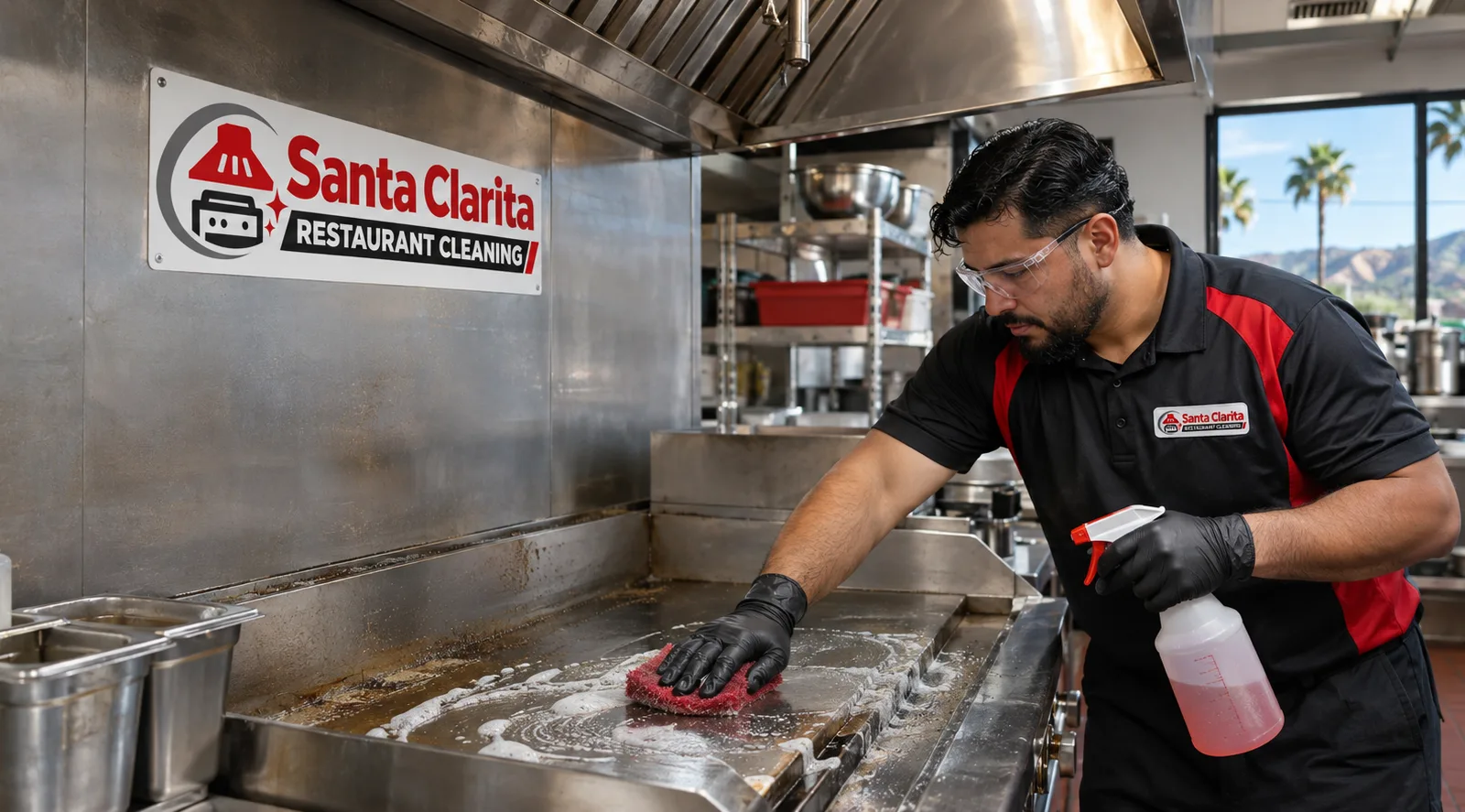
Cleaning can target equipment exteriors, splash areas, nearby walls, floor edges, and accessible spaces where aerosolized grease and cooking residue settle.
Serving Santa Clarita, California & surrounding areas
Open 24/7
Commercial kitchen cleaning • San Fernando
Detailed cleaning built around your equipment, operating hours, and sanitation priorities, with a written scope that keeps expectations clear.
Cleaning scope
Commercial Kitchen Cleaning San Fernando businesses can schedule around prep, service, and closing routines should address the places daily wipe-downs miss. Grease settles behind equipment, food debris collects beneath workstations, and residue builds along walls, floors, casters, and equipment exteriors. A defined professional cleaning plan helps control that buildup while giving managers a consistent standard for reviewing the work.
Santa Clarita Restaurant Cleaning handles one-time deep cleans and recurring care for restaurants and other food-service operations. Our restaurant specialists serving Santa Clarita, CA bring practical commercial cleaning methods to nearby San Fernando kitchens and tailor the scope to the layout, soil level, equipment access, and operating schedule. Before work begins, we identify priority areas, access limits, and any surfaces that require special handling.
Detailed kitchen care
A commercial kitchen clean may include equipment exteriors, stainless steel prep tables, sinks, shelving, washable wall surfaces, backsplashes, floor edges, baseboards, mats, doors, handles, and reachable areas beneath or behind movable equipment. Degreasing is matched to the surface and allowed the proper dwell time before residue is agitated and removed. Food-contact surfaces receive appropriate treatment and a final wipe or rinse based on the product label and site protocol.
Floor care often requires more than mopping. Grease and food soil collect around cook lines, under shelving, at wall junctions, and near dishwashing areas. The crew can scrub these zones methodically, extract or remove dirty solution, and leave the floor ready for the restaurant's required reopening procedure. Stainless steel is cleaned with the grain to reduce visible streaking, while painted, sealed, or specialty surfaces are tested before stronger products are used.
Routine kitchen cleaning does not automatically include every grease-management task. Exhaust hoods, ducts, rooftop fans, grease traps, pest remediation, hazardous cleanup, and internal appliance servicing may require separate qualified providers. We define these boundaries in the scope so managers know exactly what the scheduled cleaning covers.
Tailored service options
Cleaning can target equipment exteriors, splash areas, nearby walls, floor edges, and accessible spaces where aerosolized grease and cooking residue settle.
Worktables, shelving, sinks, handles, washable surfaces, and floors can be addressed according to the kitchen's sanitation protocol and the manufacturer's product directions.
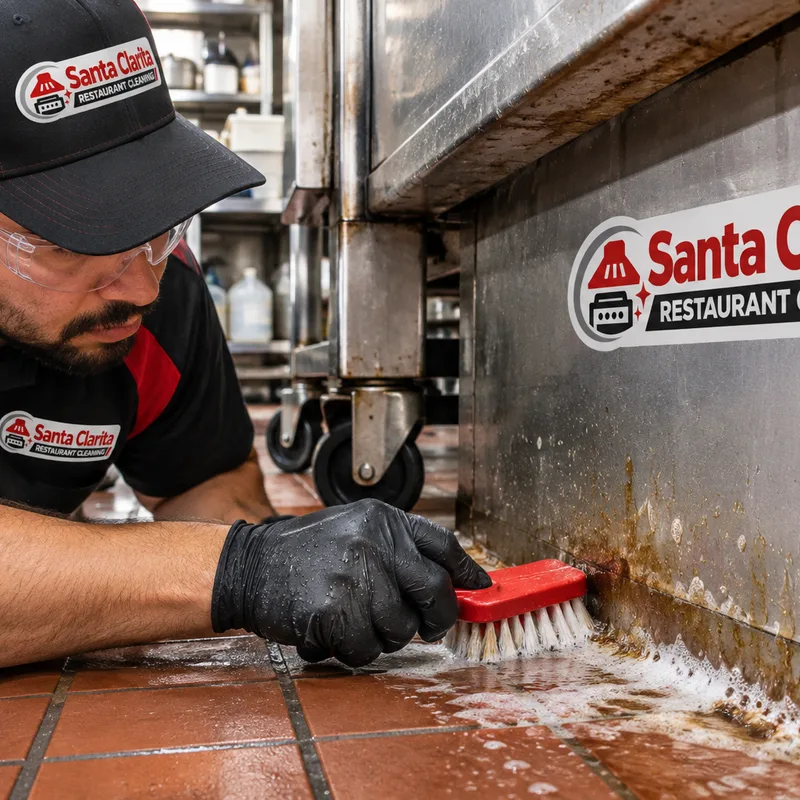
Scrubbing around casters, beneath movable units, along baseboards, and at corners removes soil that ordinary end-of-shift mopping can leave behind.
When included in the written scope, cleaning can extend to dining floors, restrooms, employee areas, doors, and other customer or staff touchpoints.
A focused reset may suit a reopening, management change, equipment move, renovation cleanup, or a kitchen that needs attention beyond its normal routine.
Scheduled service keeps the same priority zones on a regular rotation. Frequency can be adjusted as menu volume, staffing, or operating hours change.
Cleaning workflow
We review the cook line, prep and dish areas, floors, access points, movable equipment, sensitive surfaces, and the restaurant's service schedule. Photos or a written area list can help document the intended scope.
The plan identifies included areas, exclusions, expected access, cleaning frequency, and whether the work will occur after closing, before opening, or during another approved window.
Restaurant staff secure food, utensils, small equipment, and personal items as agreed. The cleaning crew organizes products and tools, protects adjacent areas when needed, and confirms which equipment may be moved.
The crew works through the assigned areas using degreasing, agitation, wiping, scrubbing, and solution removal methods suited to each surface. Tools used near food preparation areas are kept separate from restroom cleaning tools.
Priority areas are checked against the work order. Managers can raise access issues or missed details promptly, and recurring plans can be refined based on actual kitchen conditions.
Local scheduling
San Fernando restaurants often depend on narrow cleaning windows between closing duties and the next prep shift. The work plan needs realistic access time, especially when equipment must cool, floor areas must be cleared, or cleaned surfaces need to dry before staff return. A smaller kitchen may still require substantial labor if the cook line is tightly arranged or buildup limits access.
Businesses near the commercial activity along San Fernando Road may also have loading, parking, or rear-entry procedures that affect arrival and equipment setup. Those details should be confirmed before the appointment rather than handled after a crew arrives. Southern California's warm conditions can increase the importance of prompt food-residue removal, but cleaning still needs to follow the restaurant's own food-safety plan and product-label requirements.
Our office is based on Springbrook Avenue in Santa Clarita, allowing us to coordinate nearby San Fernando work with a clear arrival plan. We do not treat every restaurant alike. A quick-service cook line, bakery production room, café, and full-service kitchen have different soil patterns, equipment arrangements, and shutdown constraints.
Preparation and accountability
Good results start before the crew arrives. The restaurant should identify who can authorize access, which appliances are safe to move, and when cooking surfaces will be cool enough to clean. Food, utensils, and portable appliances should be removed or protected according to the agreed preparation plan. If gas, electrical, or water connections prevent equipment movement, the unit should remain in place unless a qualified person handles it.
Cleaning and sanitizing are related but distinct steps. Cleaning removes food soil, grease, and other residue. Sanitizing follows cleaning on applicable food-contact surfaces and uses an approved product at the concentration and contact time stated on its label. Restaurant management remains responsible for its food-safety procedures, employee practices, equipment maintenance, and any regulatory obligations. Our job is to complete the contracted cleaning scope carefully and document practical limits such as blocked access, damaged surfaces, or equipment that could not be moved.
For recurring Restaurant Cleaning San Fernando managers should review conditions periodically. Menu changes, longer operating hours, added fryers, or altered prep flow can change where grease and food debris accumulate. Updating the rotation keeps labor focused on the areas that now need it.
Pricing factors
Commercial kitchen cleaning in San Fernando typically costs about $500 to $2,500 per visit, while large kitchens or heavy restoration-level buildup may cost more. A limited floor and surface clean falls near the lower end; detailed cook-line degreasing and behind-equipment work require more labor.
Final price depends on kitchen size, grease level, equipment access, cleaning frequency, operating window, and included dining or restroom areas. Hood ducts, grease traps, and hazardous cleanup are separate specialties. The exact cost is confirmed after a walkthrough or detailed scope review.
A written cleaning scope gives your manager a practical schedule, defined priority areas, and clear preparation steps before the crew arrives.
Call for a Free QuoteCommon questions
Yes, after-hours cleaning can often be arranged when access and working time are confirmed in advance. The schedule should account for equipment cooldown, staff closing duties, crew entry, floor drying, and the next prep shift. Restaurants with restricted rear access or parking near San Fernando Road should share those instructions during scheduling.
The right frequency depends on cooking volume, menu, equipment, staffing, and how quickly grease accumulates. Frying and high-volume cooking may require more frequent cook-line and floor attention than light café preparation. A walkthrough can establish a starting rotation, which can then be adjusted after the first few services.
Exhaust hood, duct, and rooftop fan cleaning should be listed separately and may require a specialist with the proper equipment and documentation. General kitchen cleaning usually addresses accessible hood exteriors and nearby surfaces only when those items appear in the scope. Confirm the boundary before approving a proposal.
Staff should secure exposed food, utensils, small appliances, and personal belongings, then clear agreed work areas. Cooking equipment should be shut down and cool, and an authorized contact should provide entry instructions. Equipment connected to gas, power, or plumbing should not be moved unless the plan assigns that task to a qualified person.
Limited work may be possible away from active food preparation and customer traffic, but deep kitchen cleaning is usually better during a shutdown window. Degreasing, equipment movement, wet-floor work, and product dwell times can interfere with safe operations. The walkthrough identifies tasks that require an empty or inactive zone.
Kitchen size, current buildup, equipment density, access, required timing, and the exact list of surfaces drive the quote. A compact kitchen can cost more than expected if the line is tightly packed and equipment cannot be moved easily. Photos help with early planning, but an on-site review gives the clearest scope.
Yes, a one-time deep clean can be planned for a reopening, ownership transition, equipment change, or operational reset. The restaurant should allow enough time for access, cleaning, drying, manager review, and any separate equipment or exhaust work. Scheduling early is especially useful when contractors or vendors also need the kitchen.
Tell Santa Clarita Restaurant Cleaning about your kitchen layout, operating hours, and priority areas. We will help define a practical scope and timing plan for your San Fernando restaurant.