Restaurant deep cleaning • Santa Clarita

Restaurant Deep Cleaning Services in Santa Clarita

Detailed cleaning for commercial kitchens, walk-in coolers, storage areas and high surfaces, planned around your operating schedule and documented in a clear scope.

✓Written cleaning scope
✓Operating-hour planning
✓Surface-specific methods
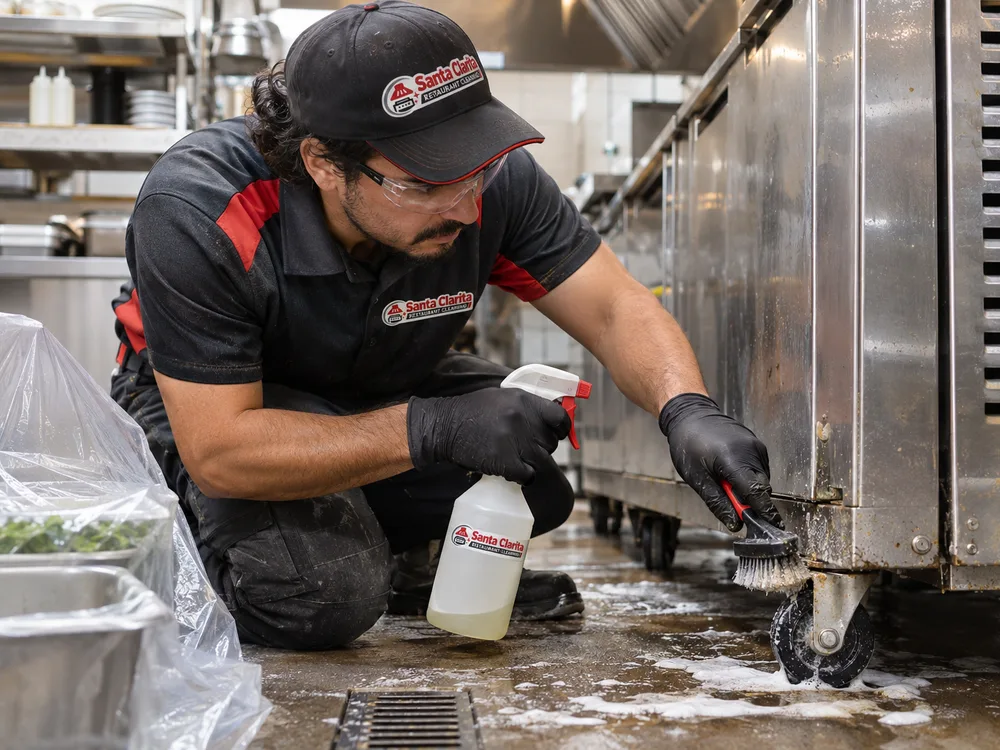
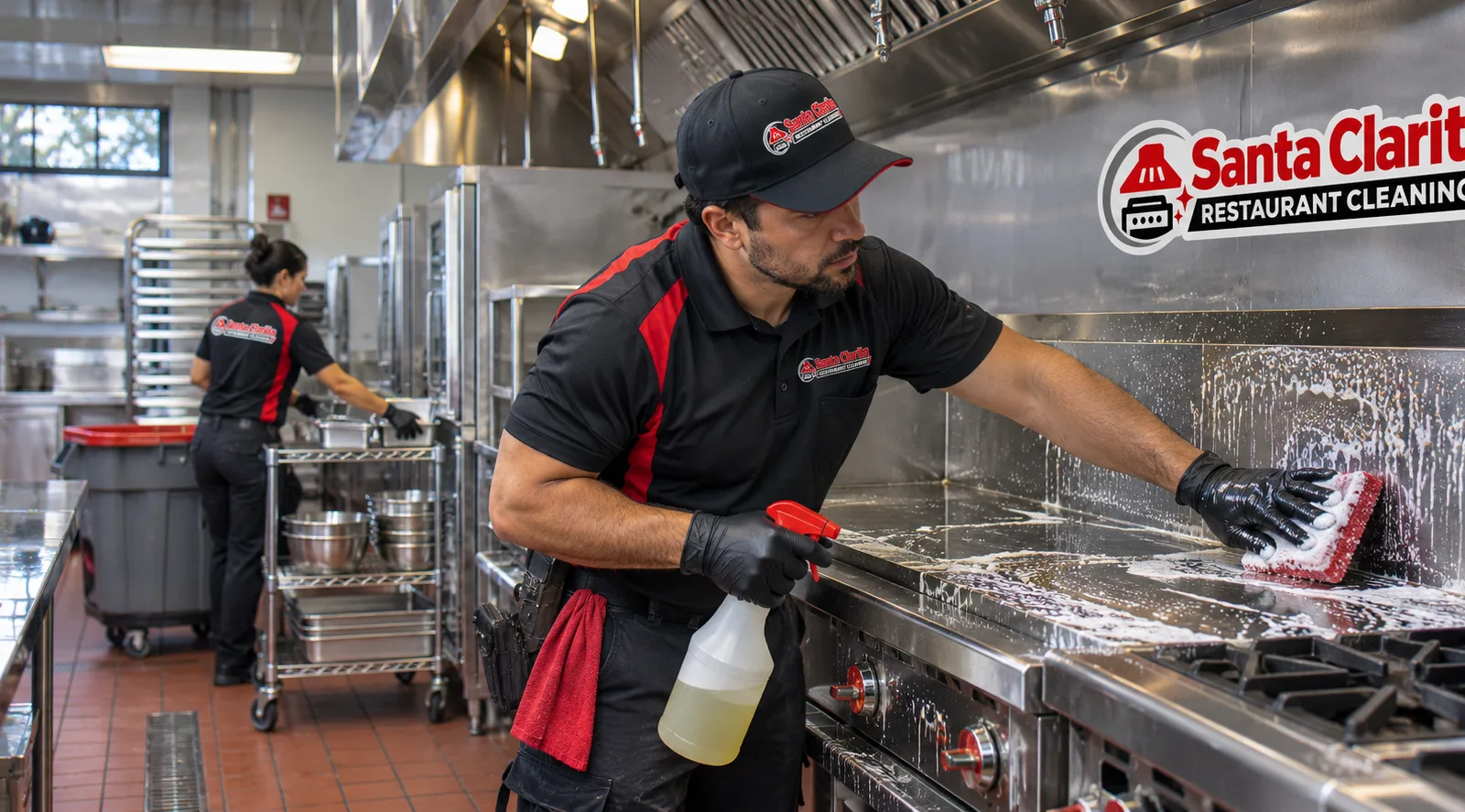
Professional cleaner performing detailed degreasing on stainless steel equipment in a Santa Clarita commercial kitchen
READY FOR Opening Detailed • Checked

Cleaning scope

Detailed Cleaning Built Around Your Restaurant

Restaurant Deep Cleaning Services address the buildup that routine opening and closing work may leave behind. The scope can cover cooking-line exteriors, equipment sides and undersides, stainless steel surfaces, walls, washable ceilings, floors, drains, shelving, storage areas, walk-in coolers and high surfaces. Each job should begin with a walkthrough because a quick-service kitchen, full-service dining room and commissary have different equipment, access and operating demands.

Santa Clarita Restaurant Cleaning works as a professional restaurant company in Santa Clarita, with planning based at 25781 Springbrook Ave, Suite 4. The crew identifies priority areas, confirms which equipment can be moved or cleaned in place, and coordinates access around prep, service and delivery windows. Restaurants near Old Town Newhall may need careful staging where commercial spaces and access are tighter. Valencia dining locations can have larger front-of-house areas or multi-tenant scheduling concerns. Canyon Country and Saugus operators may need work timed around busy commuter meal periods. These details affect crew setup and sequencing, so they belong in the cleaning plan.

A written scope separates included surfaces from exclusions and special requests. It also records access needs, water and electrical considerations, chemical restrictions, and the condition of sensitive finishes. That preparation gives managers a practical plan before work begins.

Request a Callback

Deep-clean focus areas

What Restaurant Deep Cleaning Services Can Cover

Kitchen Deep Cleaning

Degreasing and detailed cleaning can address cooking-line exteriors, prep tables, sinks, backsplashes, washable walls, equipment legs, casters and accessible spaces beneath or beside equipment. Food-contact surfaces require compatible products and proper rinsing according to product directions.

Walk-In Cooler Cleaning

Walk In Cooler Cleaning may include shelving, walls, doors, handles, gaskets and floors after food is protected or relocated. The plan should avoid damaging evaporator components, electrical controls and temperature sensors.

High Dusting

High Dusting in Santa Clarita targets accessible pipes, ledges, vents, light exteriors and other overhead surfaces where dust can settle. Work is sequenced before lower-level cleaning so fallen debris is collected during the final pass.

Floors, Edges and Drains

Floor care reaches edges, corners, equipment perimeters and compatible drain components. The crew selects tools and chemicals for the flooring material, soil load and slip-risk controls rather than relying on one process everywhere.

Dining and Service Areas

Restaurant Detailed Cleaning can include booth bases, chair legs, partitions, service stations, washable wall surfaces and other frequently handled areas. Upholstery and specialty finishes are evaluated before treatment.

Storage and Receiving Areas

Shelving exteriors, racks, walls and floors can be cleaned after products are removed or safely contained. Clear staging keeps chemicals and wet work separate from food, packaging and clean utensils.

Methods and sequencing

Commercial Kitchen Deep Cleaning in Santa Clarita

Commercial kitchens accumulate different soils in different zones. Aerosolized cooking grease settles on nearby equipment and overhead surfaces. Carbonized residue may require dwell time and controlled agitation. Floors often hold a combination of grease, food particles and tracked-in soil around edges, casters and fixed equipment.

Professional Restaurant Deep Cleaning starts by matching the method to the surface. Degreasers must be compatible with stainless steel, painted surfaces, tile, grout and resilient flooring. Product labels determine dilution, dwell time, required personal protective equipment and rinsing. Cleaners should never mix chemicals, and they must keep chemical use away from exposed food, utensils and packaging.

Southern California's dry periods can add fine outdoor dust near entrances, receiving doors and exterior-facing vents. In Santa Clarita, that makes overhead ledges and less-visible edges worth including in periodic work. High dusting comes before equipment and floor cleaning, while wet cleaning is staged to control overspray and foot traffic. Hood interiors, ducts, fans and fire-suppression components require appropriately qualified specialty service and should not be treated as ordinary surface cleaning.

Request a Callback
Restaurant deep cleaner detailing the casters and lower edges of commercial kitchen equipment
Detail work reaches equipment edges, casters and accessible gaps that routine cleaning may miss.

Cleaning workflow

How Professional Restaurant Deep Cleaning Works

  1. Step01

    Walk Through the Facility

    The manager and cleaning team review the kitchen, cooler, dining room, storage areas and access points. They identify heavy buildup, delicate materials, equipment restrictions and any areas that must remain available.

  2. Step02

    Set the Scope and Schedule

    The written plan lists included areas, preparation responsibilities and estimated working time. Scheduling can be arranged around closing, prep, deliveries or a planned shutdown, depending on the size and condition of the restaurant.

  3. Step03

    Protect Food and Sensitive Areas

    Food, clean utensils, packaging and portable equipment are removed, covered or isolated as appropriate. The crew establishes wet-work zones and follows product-label requirements for chemical handling and personal protective equipment.

  4. Step04

    Clean from High Areas Down

    High dusting and upper surfaces are handled before equipment exteriors, walls, fixtures, floors and drains. This sequence prevents debris from falling onto areas that have already been cleaned.

  5. Step05

    Inspect and Hand Back the Space

    The team checks the work against the agreed scope, notes areas limited by access or equipment condition, and allows surfaces to dry as required. Management can review priority areas before the restaurant returns to normal use.

Request a Callback
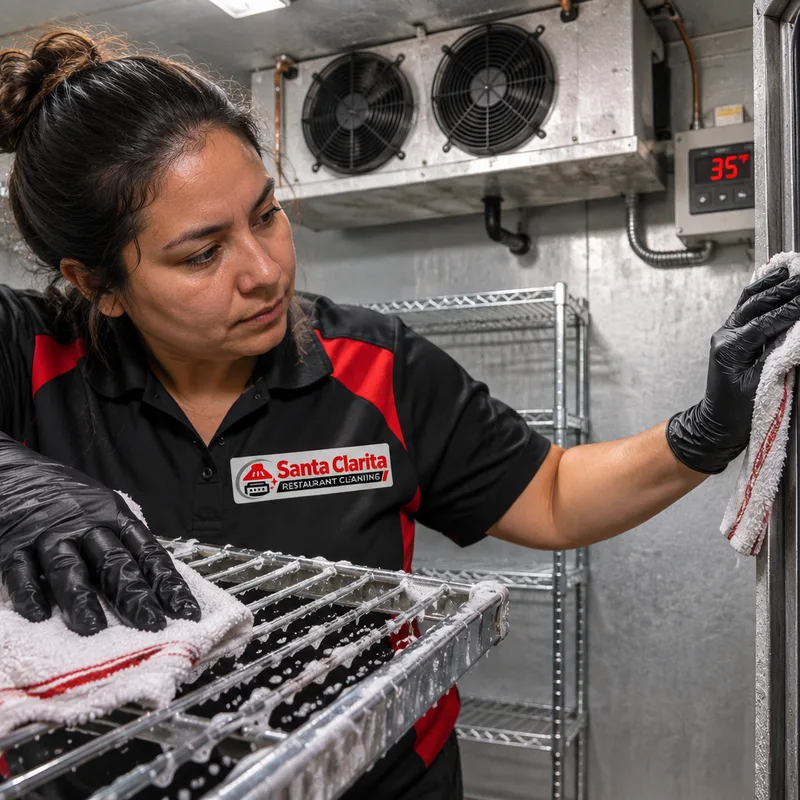
Professional cleaner wiping removable shelving and door gaskets in a cleared restaurant walk-in cooler
Cooler cleaning is completed in controlled zones with food relocated and refrigeration components protected.

Cooler coordination

Walk-In Cooler Cleaning Requires Careful Coordination

A walk-in cooler should be cleaned without compromising food protection or damaging refrigeration components. Before work starts, management determines where products will be held and which shelves can be cleared. Cleaning is then completed in manageable zones so doors are not left open longer than necessary.

The ordinary cleaning scope may cover removable shelving, walls, floors, door surfaces, handles and gaskets. Cleaners should avoid spraying evaporator fans, controls, wiring or sensors. Ice buildup, drainage failures, damaged gaskets and mechanical temperature problems need refrigeration service rather than a stronger cleaning method.

Cooler floors and lower walls often need attention around rack feet and corners. Any product used in a food-storage area must be suitable for the intended surface and applied according to its label. When cleaning is complete, surfaces should be dry, shelving should be returned in an orderly way, and management should verify that the unit is operating at the required temperature before restocking decisions are made.

Request a Callback
READY FOR Opening Detailed • Checked

Management-ready planning

A Practical Scope for Restaurant Managers

A useful proposal states exactly what the Restaurant Deep Cleaners will handle. It should name rooms and surfaces, distinguish movable equipment from fixed equipment, identify preparation expected from restaurant staff, and describe known access limitations. It should also clarify whether the work includes the dining room, restrooms, storage rooms, walk-in units or exterior service areas.

Control cross-contamination

Ask how the crew controls cross-contamination between restrooms, floors, food-storage areas and food-contact surfaces. Color-coded tools, separate cloths and a high-to-low cleaning sequence are common control measures.

Review worksite safety

Managers should discuss Safety Data Sheets, chemical labeling, electrical hazards, floor signs, slip prevention and the process for reporting damaged surfaces or equipment.

Support the sanitation program

Deep cleaning supports a restaurant's sanitation program, but it does not replace daily cleaning, temperature control, pest management or employee food-safety procedures. It also does not guarantee an inspection outcome. Restaurants in Los Angeles County remain responsible for meeting applicable public-health requirements. A good cleaning plan supports that responsibility through clear tasks, careful methods and documented completion.

Request a Callback

Pricing factors

How Much Does Restaurant Deep Cleaning Cost in Santa Clarita?

Restaurant deep cleaning in Santa Clarita typically costs about $800 to $3,500 for many independent restaurants, while large kitchens, severe grease buildup or multi-area projects may cost more. A smaller targeted kitchen or walk-in cooler job may fall around $400 to $1,200.

Final pricing depends on square footage, soil level, equipment density, high-access work, cooler contents, shift timing and how much equipment must be moved. The written quote should distinguish routine surface cleaning from specialty hood, duct or mechanical work. Exact cost is confirmed after an on-site walkthrough and scope review.

Request a Callback

Arrange a walkthrough to define priority areas, operating constraints and a written cleaning scope before work is scheduled.

Call for a Free Quote

Common questions

Questions Restaurant Operators Ask Before Booking

How long does Restaurant Deep Cleaning in Santa Clarita take?

A targeted area may take several hours, while a full restaurant deep clean can require an overnight shift or more than one service window. Kitchen size, grease buildup, equipment access, high dusting and walk-in cooler preparation all affect duration. Santa Clarita restaurants with fixed delivery or prep schedules should share those times during the walkthrough so the work can be sequenced around operations.

Can Kitchen Deep Cleaning be scheduled after closing?

Yes, after-hours cleaning can be planned when crew access, building rules and the agreed scope allow it. Managers should account for alarm access, key control, equipment cooldown and the time needed for rinsed surfaces or floors to dry. Multi-tenant properties in Valencia or commercial corridors near Old Town Newhall may also have access or noise requirements set by property management.

Do we need to remove food before Walk In Cooler Cleaning?

Food must be protected from chemicals, moisture and contamination, which often means relocating products or clearing one controlled zone at a time. Management remains responsible for safe product handling and temperature control. The cleaning team should avoid evaporator fans, sensors, electrical parts and refrigeration controls, while mechanical faults should be handled by a refrigeration technician.

Does restaurant deep cleaning include exhaust hoods and ducts?

Visible exterior surfaces may be included, but hood interiors, ducts, fans and fire-suppression components require a separate, appropriately qualified specialty service. The proposal should state the boundary clearly. Surface cleaning around the cooking line must never be represented as a substitute for required exhaust-system inspection or cleaning.

How often should a restaurant schedule detailed cleaning?

The right frequency depends on cooking volume, menu, equipment layout, daily cleaning performance and the rate of grease or dust buildup. High-use fry lines may need targeted attention more often than low-grease prep areas. A Santa Clarita location exposed to fine dust through receiving doors may also need overhead ledges and entry-adjacent areas reviewed more frequently.

What should we do before Restaurant Deep Cleaners arrive?

Confirm access, identify shutdown times, secure records and valuables, and remove or protect food, clean utensils and packaging as agreed. Staff should flag damaged finishes, loose electrical components and equipment that cannot be moved. Providing the current layout and priority list during the walkthrough helps prevent delays once cleaning begins.

Plan a Cleaner, More Manageable Restaurant Deep Clean

Tell Santa Clarita Restaurant Cleaning which areas need attention and when the facility is available. The next step is a walkthrough, a defined scope and a schedule that respects your kitchen's operating needs.