Restaurant cleaning • Glendale

Restaurant Cleaning Glendale

Detailed care for commercial kitchens, equipment, dining rooms, and service areas, planned around your operating schedule.

✓ Written site-specific scope
✓ After-hours planning
✓ Area-specific procedures
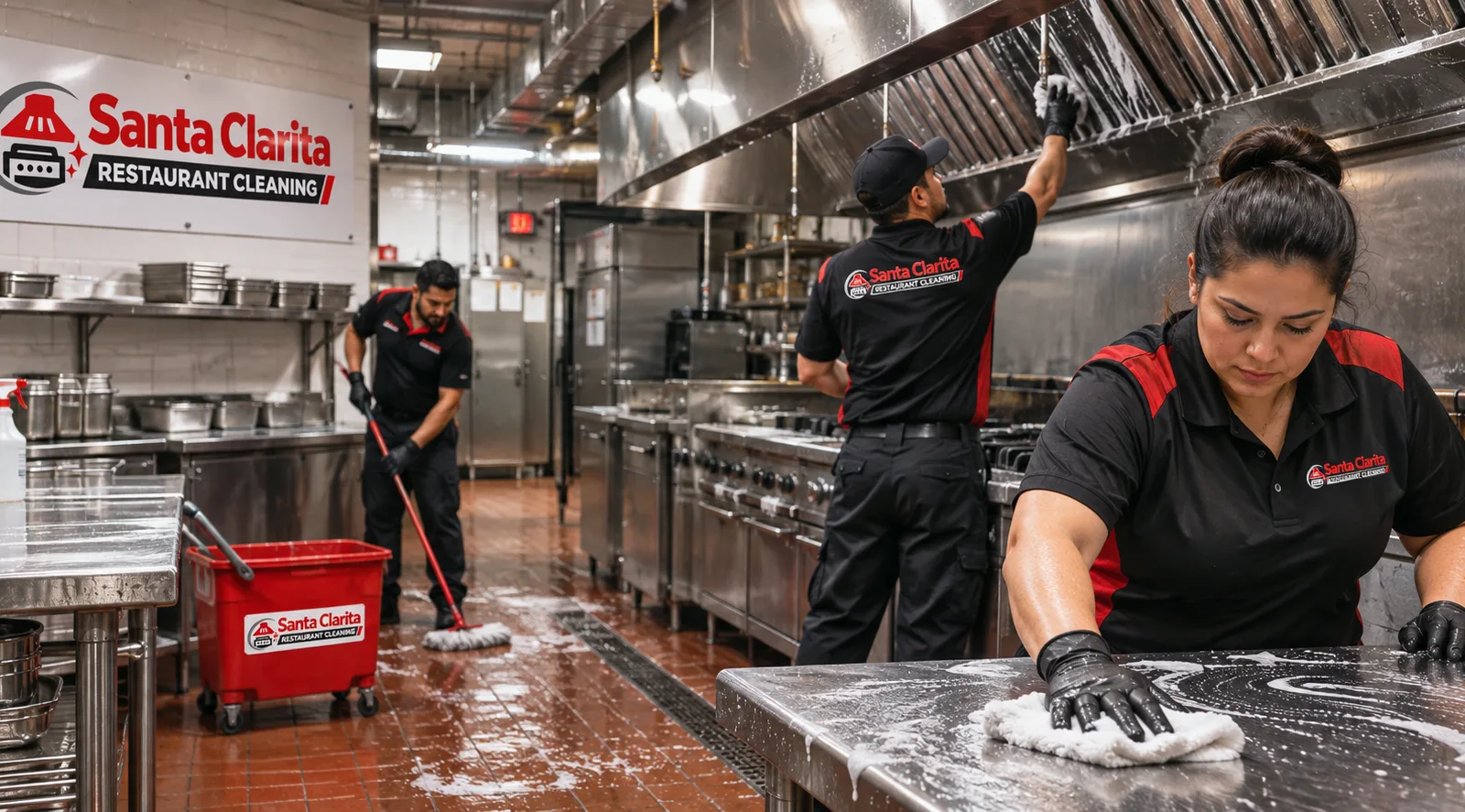
A trained cleaning crew performing detailed after-hours cleaning in a Glendale commercial restaurant kitchen with stainless steel equipment, floors, and food-contact areas visible
READY FOR Opening Detailed • Checked

Operational cleaning scope

Commercial Cleaning Built Around Restaurant Operations

Restaurant Cleaning Glendale should address the areas that daily opening and closing routines cannot fully cover. Grease settles behind cooking equipment, crumbs collect under fixed counters, and repeated service leaves residue on floors, walls, fixtures, and high-touch surfaces. A professional scope identifies those problem areas and assigns the right cleaning method to each one.

Santa Clarita Restaurant Cleaning plans work around the realities of food service: equipment must be handled carefully, food-contact surfaces need suitable products, and cleaned areas must be ready for the next shift. Our team coordinates each job from our base on Springbrook Avenue in Santa Clarita and establishes the scope before cleaning begins.

Glendale restaurants operate in several distinct settings. Downtown Glendale and the Brand Boulevard corridor have dining rooms shaped by steady pedestrian activity and frequent guest turnover. The Americana at Brand and Glendale Galleria area adds busy retail dining and shared access considerations. Montrose restaurants often occupy smaller storefronts where equipment clearance and storage space can affect cleaning access. Along the Glendale Freeway and major commercial corridors, airborne dust and vehicle residue can add to exterior entry and front-of-house maintenance. These conditions make a written, site-specific checklist more useful than a generic cleaning package.

Request a Callback

Restaurant focus areas

What Restaurant Cleaning in Glendale Can Cover

Commercial Kitchens

Degreasing and detailed cleaning can cover prep tables, stainless steel surfaces, backsplashes, sinks, shelving, walls, doors, floor edges, and reachable areas beneath or behind equipment. The exact scope should distinguish food-contact surfaces from surrounding structural surfaces.

Dining and Guest Areas

Dining-room work may include tables, seating, partitions, ledges, baseboards, fixtures, hard floors, and high-touch points. Cleaning can be scheduled after service so seating layouts and guest traffic do not interfere with the work.

Restrooms and Employee Areas

Restrooms, break areas, lockers, and staff touchpoints require separate tools and procedures to reduce cross-contamination. Color-coded cloths and mop systems help keep restroom tools out of kitchen and dining zones.

Entry and Service Areas

Entry glass, host stations, pickup counters, waiting areas, and service lanes affect the first impression customers receive. These areas often need attention to fingerprints, tracked soil, spills, and residue around floor transitions.

Floors and Detail Work

Floor care may include vacuuming, sweeping, wet cleaning, edge work, spot treatment, and attention beneath movable items. The method depends on whether the surface is quarry tile, sealed concrete, resilient flooring, or another commercial material.

Scheduled Deep Cleaning

Recurring detail work can rotate through low-reach and high-reach areas that are easy to miss during daily duties. A rotation schedule assigns tasks by frequency and records what was completed.

Equipment care

Restaurant Equipment Cleaning Glendale Businesses Can Schedule

Restaurant equipment cleaning requires more than wiping visible stainless steel. Grease and food debris often build up around legs, casters, control surfaces, seals, handles, splash zones, and the gaps between adjacent units. Detailed care may include accessible exteriors and removable components of ranges, ovens, fryers, griddles, refrigerators, prep units, dishwashing stations, and other commercial equipment.

The cleaning plan should follow manufacturer instructions and the restaurant's safety procedures. Equipment must be cool, stable, and properly prepared before work begins. Controls, electrical connections, pilot assemblies, sensors, insulation, and internal mechanical parts are not treated like ordinary washable surfaces. Technicians should also avoid forcing water into seams or openings where moisture can damage components.

Some work belongs to specialized vendors. Exhaust hood, duct, and fan cleaning is a distinct fire-safety service, while refrigeration repair, electrical work, gas service, pest control, and grease interceptor pumping require the appropriate trade. A responsible equipment-cleaning scope states what is included, what must be moved, and which components remain untouched.

Request a Callback
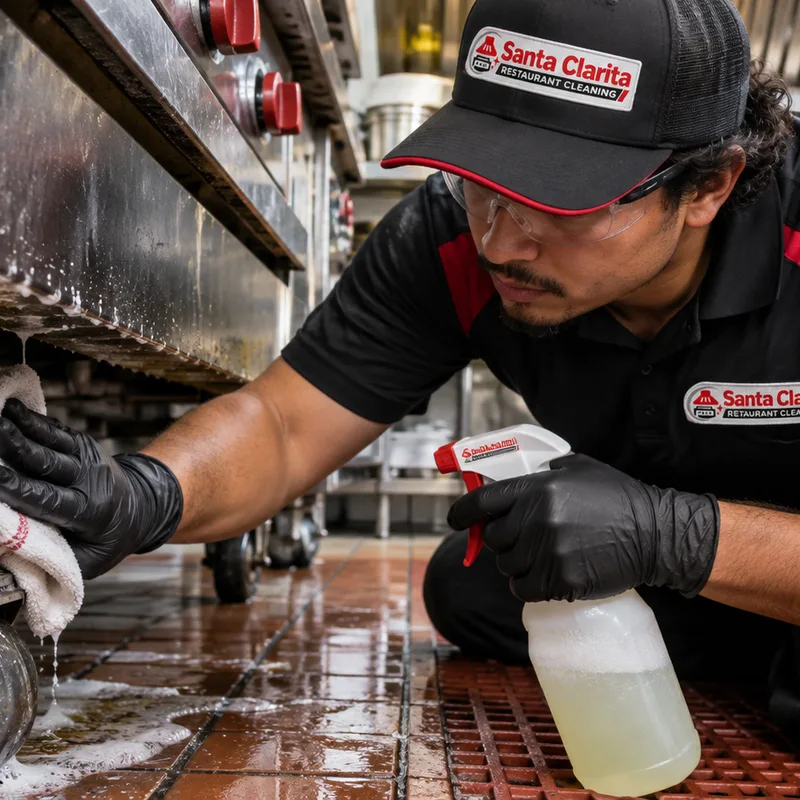
Worker carefully degreasing the exterior, legs, casters, and accessible side gaps of commercial cooking equipment in a Glendale restaurant kitchen
Equipment care should account for controls, connections, removable parts, and manufacturer guidance.

Cleaning workflow

How the Cleaning Process Works

  1. Step 01

    Walk Through the Restaurant

    The first step is a site review covering the kitchen line, prep and warewashing areas, dining room, restrooms, entries, storage constraints, and equipment access. Existing buildup, delicate finishes, operating hours, alarm procedures, and water access are discussed before the scope is written.

  2. Step 02

    Define Tasks and Responsibilities

    The written plan identifies surfaces, equipment exteriors, movable items, exclusions, and the restaurant's preparation duties. It should also state whether the work is a one-time deep clean, recurring service, or a rotating program for different areas.

  3. Step 03

    Prepare and Protect the Work Area

    Food, utensils, packaging, and small equipment are secured or removed as agreed. The crew confirms that cooking units are cool and uses separate tools for kitchen, dining, and restroom zones. Warning signs and controlled work zones help protect staff who may remain in the building.

  4. Step 04

    Clean in a Controlled Order

    Work generally proceeds from higher surfaces to lower ones and from cleaner areas toward heavier soil. Dry debris is removed before wet cleaning, degreasers receive appropriate dwell time, and floors are completed after surrounding surfaces so loosened residue is not left behind.

  5. Step 05

    Review the Completed Scope

    A final walkthrough checks the agreed task list, identifies any inaccessible or damaged areas, and records follow-up needs. For recurring work, the checklist can be adjusted as traffic patterns, menus, equipment layouts, or operating schedules change.

Request a Callback

Arrange a site walkthrough to establish priorities, access requirements, scheduling needs, and a written cleaning scope for your Glendale restaurant.

Call for a Free Quote

Surface-safe methods

Cleaning Methods That Match the Surface and Soil

Effective restaurant cleaning starts with soil identification. Carbonized cooking residue, fats, protein deposits, mineral film, tracked grit, and ordinary dust do not respond to the same chemistry. Alkaline degreasers are commonly used on compatible grease-covered surfaces, while neutral cleaners are often a better fit for routine care of finished floors. Product labels, dilution instructions, dwell times, and surface compatibility guide the choice.

Cleaning and sanitizing are separate steps. Cleaning removes food residue, grease, and other soil. Sanitizing is performed on an already cleaned surface using an appropriate product at its labeled concentration and contact time. Mixing chemicals can create dangerous reactions, so products should remain in labeled containers and be used according to their safety data sheets.

Local oversight also matters. Restaurants in Glendale operate under requirements enforced by the Los Angeles County Department of Public Health, Environmental Health. Professional cleaning supports the restaurant's sanitation program, but it does not replace employee food-safety duties, required records, pest prevention, equipment maintenance, or regulatory inspection. The person in charge remains responsible for the facility's day-to-day compliance.

Request a Callback
Restaurant cleaning lead reviewing a written checklist with a manager in a Glendale dining room after closing with cleaning tools staged safely away from food areas

Local service planning

Why Glendale Restaurants Benefit From a Site-Specific Plan

Access and timing can change the entire job. A compact kitchen in a Montrose storefront may require staged movement of racks and small appliances because there is little open floor area. A restaurant near Brand Boulevard may need work scheduled around deliveries, parking access, building security, and neighboring businesses. Dining locations near major retail destinations may place greater emphasis on entrances, waiting zones, pickup counters, and frequent front-of-house touchpoints.

Southern California's long dry periods can also increase dust at doors, window ledges, vents, and outdoor-facing areas. When rain does arrive, entrances may need extra attention for tracked moisture and soil. These conditions should influence task frequency rather than trigger a one-size-fits-all schedule.

Reliable service depends on practical details: who provides access, which equipment may be moved, where supplies can be staged, how alarms are handled, and when cleaned areas must be released to staff. Santa Clarita Restaurant Cleaning can document those details before the first visit so the crew and restaurant manager share the same expectations.

Request a Callback
READY FOR Opening Detailed • Checked

Scheduling strategy

Choosing the Right Restaurant Cleaning Glendale Schedule

The right frequency depends on cooking volume, menu, hours, equipment arrangement, floor type, staffing, and how much cleaning employees complete between professional visits. High-grease cooking can require more frequent detail work around the line, while a café may place more emphasis on beverage stations, display areas, seating, and entry glass.

Match frequency to traffic

Restroom traffic and takeout activity can change front-of-house priorities. Task frequency should reflect actual use rather than a generic calendar.

Use deep cleans strategically

A one-time deep clean can help before reopening, after equipment is rearranged, at the end of a construction project, or when accumulated residue has exceeded the daily crew's capacity.

Define recurring and rotating work

Recurring service is better for maintaining a defined standard. Many operators use a hybrid plan: routine visits for core areas, plus rotating detail tasks for walls, shelving, equipment gaps, floor edges, and other periodic needs.

Review the proposal before approving it

Ask for a clearly itemized scope. Confirm whether equipment movement, interior appliance cleaning, removable parts, chemical supply, waste handling, and after-hours access are included. The proposal should also identify exclusions and note any surfaces that require testing or manufacturer approval.

Request a Callback

Common questions

Questions Glendale Restaurant Operators Ask

How much does restaurant cleaning in Glendale cost?

Restaurant cleaning is usually priced after a walkthrough because kitchen size, grease buildup, equipment access, dining-room area, and service frequency can change the labor substantially. A one-time deep clean generally costs more per visit than a recurring maintenance plan. The written estimate should identify included areas, preparation duties, exclusions, and any charge associated with moving accessible equipment.

Can restaurant equipment be cleaned without interrupting service?

Equipment cleaning is normally scheduled outside active cooking periods because units may need to cool and surrounding work areas must be controlled. Glendale restaurants with late service or early preparation should provide their operating window during the walkthrough. The schedule can then account for cooldown, cleaning, drying, and staff access before the next shift.

Do you clean behind and beneath commercial kitchen equipment?

Accessible areas behind and beneath equipment can be included when movement is safe and agreed upon in advance. Gas-connected, hardwired, plumbed, very heavy, or manufacturer-restricted units may need a qualified technician or facility representative. The site review determines what can move, who is responsible, and how floors and utility connections will be protected.

Is kitchen cleaning the same as sanitizing food-contact surfaces?

No. Cleaning removes visible soil and grease, while sanitizing follows cleaning and uses a suitable product for its labeled contact time. The restaurant should identify its approved food-contact products and operating procedures. Los Angeles County food facilities remain responsible for maintaining required sanitation practices between professional visits.

Can cleaning be scheduled for a restaurant near Brand Boulevard or Montrose?

Scheduling can be planned around the restaurant's service hours, building access, deliveries, parking limitations, and alarm procedures. Brand Boulevard properties may involve shared commercial access, while smaller Montrose storefronts can require tighter equipment-staging plans. These details are confirmed during the site review rather than assumed.

How long does a restaurant deep cleaning take?

A focused area may be completed in one work window, while a full kitchen, dining room, restrooms, and equipment-detail scope may require a longer visit or staged work. Condition, square footage, crew access, and the number of items requiring hand detail determine the duration. A realistic time window is provided after the walkthrough.

What should staff do before the cleaning crew arrives?

Staff should secure food, utensils, packaging, personal belongings, and sensitive paperwork according to the agreed preparation list. Cooking equipment should be shut down early enough to cool when equipment care is included. The manager should also arrange entry, identify restricted areas, and communicate any alarm or building-access instructions.

Plan a Cleaner Restaurant With a Defined Scope

Tell Santa Clarita Restaurant Cleaning about your Glendale location, operating schedule, equipment, and priority areas. We will discuss access and preparation needs so you can evaluate a clear plan before work begins.