Restaurant cleaning • Los Angeles

Restaurant Cleaning Services Los Angeles

Detailed cleaning for commercial kitchens, dining rooms, restrooms, and staff areas, scheduled around your operating hours and built around a clear written scope.

✓Clear written scope
✓After-hours scheduling
✓Surface-specific methods
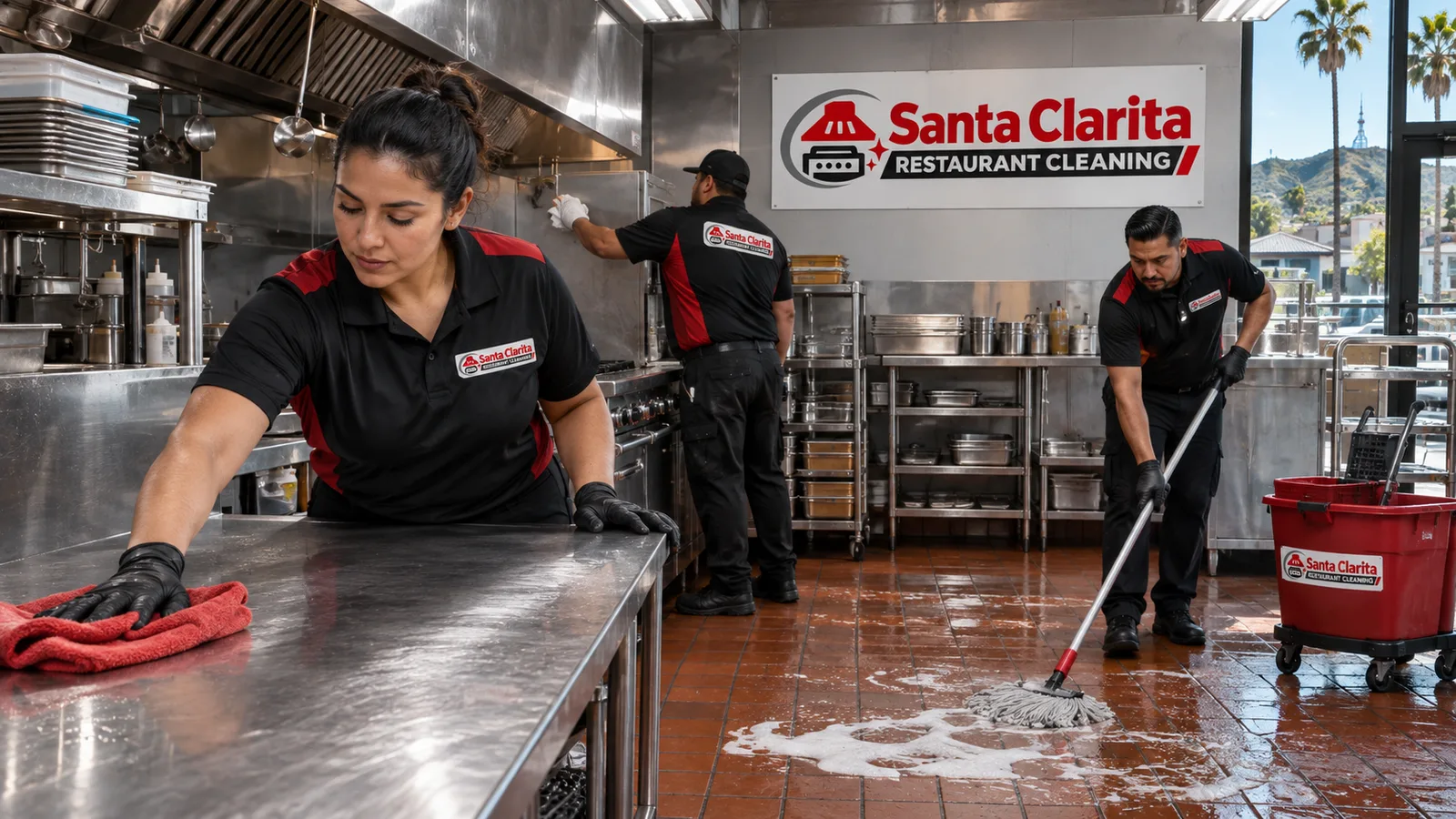
A trained restaurant cleaning crew wiping stainless steel prep surfaces and cleaning the floor in a professional Los Angeles commercial kitchen after service
READY FOR Opening Detailed • Checked

Cleaning scope

Restaurant Cleaning Built Around Daily Operations

Restaurant Cleaning Services Los Angeles should make it easier to open a clean, orderly restaurant every day. Santa Clarita Restaurant Cleaning develops practical scopes for independent restaurants, multi-unit operators, cafés, bars, bakeries, and other food-service businesses. Work can be arranged after closing, before opening, or during another agreed service window so the crew does not interfere with guests or active food preparation.

Our team cleans the areas that shape daily restaurant conditions: kitchen floors, washable wall surfaces, equipment exteriors, prep areas, dining rooms, restrooms, staff spaces, and waste-handling points. We pay particular attention to grease film, food residue, tracked soil, and touchpoints. Working from our Springbrook Avenue base, a professional restaurant company in Santa Clarita, CA can coordinate local work while planning service for businesses across the Los Angeles area.

Every restaurant has different equipment, floor materials, service volume, and access rules. A useful proposal identifies the included areas, service frequency, products, timing, and any periodic detail work. That written scope gives managers a clear basis for checking completed work.

Request a Callback

Service areas

What Our Restaurant Cleaning Services in Los Angeles Can Cover

Commercial Kitchen Cleaning

Degreasing and cleaning can include floors, baseboards, washable walls, prep surfaces, sinks, shelving exteriors, equipment exteriors, and accessible areas beneath movable items. Food-contact surfaces are handled with products and procedures appropriate to the surface and task.

Dining and Guest Areas

Crews can clean tables, chair surfaces, booths, ledges, partitions, doors, glass, and floors. The scope can account for hardwood, tile, sealed concrete, carpet, or other finishes rather than applying one method throughout.

Restrooms

Routine work can include fixtures, mirrors, dispensers, partitions, touchpoints, floors, and odor-prone areas. Managers can add restocking duties when supplies and storage arrangements are agreed in advance.

Back-of-House Areas

Service may include dry storage access aisles, employee rooms, office floors, receiving areas, and the interior approach to waste zones. Clear access helps crews clean edges and corners rather than working around loose inventory.

Periodic Detail Cleaning

Scheduled detail work can address floor edges, grout, buildup behind movable equipment, high dust, wall splatter, and other areas outside the nightly routine. Frequency depends on cooking volume and site conditions.

Opening and Closing Support

A checklist can divide cleaning duties between restaurant staff and the contracted crew. This prevents duplicated tasks and identifies who handles chairs, mats, waste, equipment shutdown, and final access.

Cleaning methods

Methods That Match Restaurant Surfaces and Soil

Restaurant cleaning requires more than a general-purpose spray and mop. Kitchen grease is commonly loosened with an appropriate degreaser, allowed the required dwell time, agitated where needed, and removed without leaving a slippery film. Cleaning removes soil; sanitizing is a separate step used on applicable surfaces after cleaning. Product labels determine dilution, contact time, surface compatibility, and required precautions.

Floor care should reflect the material and the source of buildup. Textured tile and grout may need agitation and wet recovery, while sealed concrete, resilient flooring, or finished floors require different chemistry. Excess water can create slip risks and may reach joints, equipment, or electrical components, so crews must control application and recovery.

Commercial cooking ventilation is another distinct system. Routine wiping of accessible hood exteriors is different from code-required exhaust-system cleaning, which addresses grease inside hoods, filters, ducts, and fans. Your scope should state which work is included so operational cleaning is not confused with specialist exhaust service.

California restaurants operate under food-safety requirements enforced through local environmental health programs. Cleaning plans should support the restaurant's own sanitation procedures and manager oversight. They do not replace employee food-safety duties, pest-control work, equipment servicing, or required inspections.

Request a Callback
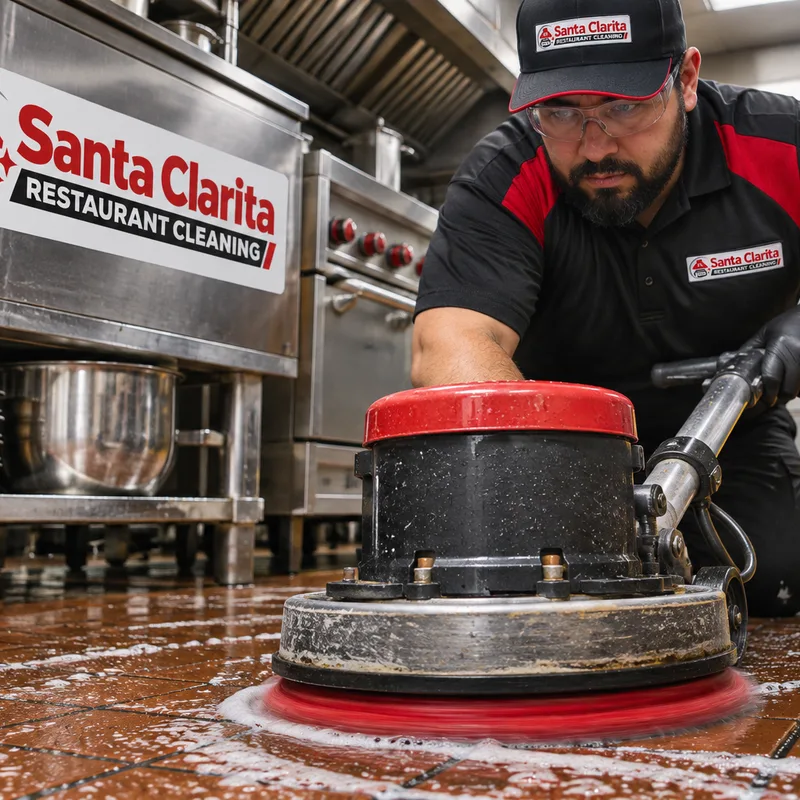
Close view of a restaurant cleaner using a floor machine on textured commercial kitchen tile, with warning signage and stainless steel equipment visible
Mechanical agitation can help remove greasy soil from textured kitchen flooring when the surface and surrounding equipment permit it.

Cleaning workflow

How We Plan Restaurant Cleaning in Los Angeles

  1. Step01

    Review the Property

    We discuss the restaurant type, operating hours, access, current trouble spots, floor materials, equipment arrangement, and the tasks already assigned to employees. A walkthrough may be needed to assess buildup and measure the working area.

  2. Step02

    Define the Scope

    The written scope identifies included rooms, surfaces, frequencies, exclusions, and periodic tasks. It can also specify key control, alarm procedures, secure areas, product restrictions, and where the crew may obtain water or dispose of recovered cleaning solution.

  3. Step03

    Set the Service Window

    Cleaning is planned around kitchen shutdown, staff departure, deliveries, and opening preparation. Restaurants near late-night destinations may require a later start, while breakfast operations often need work completed much earlier.

  4. Step04

    Complete and Check the Work

    The crew follows the agreed checklist and reports access problems, damage observed before cleaning, or tasks that could not be completed safely. A designated manager should review service concerns promptly so corrections are specific.

  5. Step05

    Adjust as Conditions Change

    Seasonal traffic, menu changes, special events, and heavier cooking can alter soil levels. The scope or frequency can be revised when routine service no longer matches the actual workload.

Request a Callback
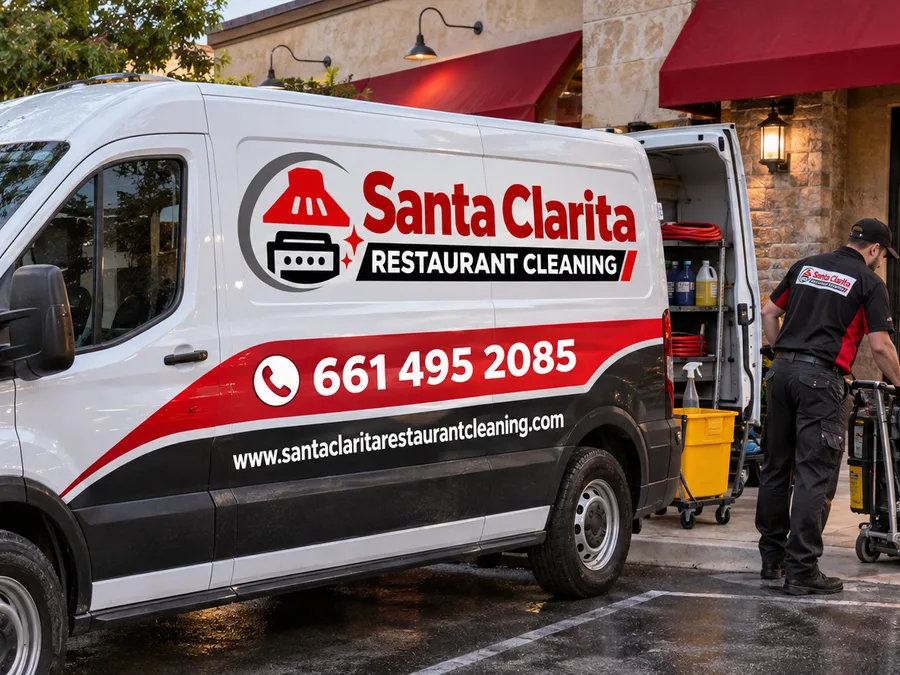
Restaurant cleaning crew unloading labeled supplies beside a service entrance at a Southern California restaurant during a scheduled after-hours visit

Local service planning

Local Scheduling Without Disrupting Service

The Los Angeles market includes very different operating patterns. Downtown Los Angeles restaurants often work around loading restrictions, controlled building access, parking constraints, and late closing times. In Hollywood, evening guest traffic and entertainment schedules can push cleaning into narrow overnight windows. Koreatown's dense restaurant corridors may require careful plans for parking, keys, elevators, and waste-area access.

Farther north, Santa Clarita restaurants generally have different access conditions than dense central-city locations, but early deliveries and commuter-oriented meal periods can still limit the available cleaning window. Hot, dry regional weather also contributes dust that enters at storefronts and service doors. Entry floors, ledges, and front glass may need more attention during dusty periods.

A dependable plan accounts for these conditions before the first visit. Managers should provide accurate access instructions, identify alarm procedures, and make sure the agreed areas are available when the crew arrives. Cleaning staff should know when kitchen equipment is cool enough to work around and which items restaurant employees must move or shut down.

Request a Callback

Selecting a provider

Choosing a Restaurant Cleaning Company

Start with the scope, not a vague promise to clean the restaurant. Ask which kitchen surfaces are included, whether crews move lightweight mats or furniture, how floor solution is recovered, and what happens when an area is blocked. Confirm whether periodic tasks such as grout scrubbing or cleaning behind movable equipment are included in the routine rate or quoted separately.

Product selection matters. A contractor should follow manufacturer labels, keep chemicals identified, avoid incompatible mixtures, and use procedures suited to food-service settings. Ask how fresh mop solution and tools are managed between restrooms, dining areas, and kitchen spaces. Color-coded tools or another clear separation system can reduce cross-use between these zones.

Access and accountability deserve the same attention. Identify who provides keys, who may disarm an alarm, where crews sign in, and who receives service reports. If work is completed after management leaves, agree on a method for documenting locked doors, incomplete tasks, leaks, pest evidence, or equipment left running.

Restaurant Cleaning Los Angeles quotes should be compared on equal terms. One proposal may cover only floors and restrooms, while another includes kitchen surfaces and scheduled detail work. Compare the included labor, frequency, exclusions, initial cleanup, consumables, and cancellation terms before judging the price.

Request a Callback
READY FOR Opening Detailed • Checked

Pricing factors

How Much Does Restaurant Cleaning Cost in Los Angeles?

Recurring restaurant cleaning in Los Angeles typically costs about $0.15 to $0.40 per square foot per visit, while a small restaurant may carry a minimum visit charge of roughly $150 to $350. Initial deep cleaning or heavy grease removal can cost considerably more.

What changes the price

Final pricing changes with kitchen size, soil level, floor material, service frequency, overnight access, equipment movement, restrooms, and requested detail work.

Confirm the exact scope

The exact cost is confirmed after a walkthrough or detailed scope review.

Request a Callback

Get a written restaurant cleaning scope that identifies the work, schedule, and responsibilities before service begins.

Call for a Free Quote

Common questions

Restaurant Cleaning Services Los Angeles FAQs

Can restaurant cleaning be scheduled after closing?

Yes, restaurant cleaning can usually be scheduled after closing or before opening when access and alarm procedures are arranged in advance. Los Angeles businesses with late-night service may need an overnight window, while breakfast restaurants often require an earlier completion time. The schedule should leave enough time for floors and other cleaned surfaces to be ready before staff return.

How often should a Los Angeles restaurant use professional cleaning?

The right frequency depends on cooking volume, operating days, guest traffic, and the duties assigned to employees. High-use kitchens and restrooms may need service several times per week or daily, while some detail tasks can follow a weekly, monthly, or condition-based schedule. A walkthrough helps separate routine work from periodic buildup removal.

Does restaurant cleaning include hood and exhaust duct cleaning?

Routine restaurant cleaning does not automatically include internal hood, duct, fan, or exhaust-system cleaning. A general scope may cover accessible hood exteriors and nearby washable surfaces, but grease removal inside the exhaust system is specialist work. Confirm the distinction in writing and maintain any separate service required for the cooking operation.

Do we need an initial deep cleaning before recurring service?

An initial deep cleaning is often recommended when grease, grout soil, floor film, or edge buildup exceeds what a routine visit can reasonably remove. The first service can establish a manageable baseline, after which recurring visits focus on maintaining it. The walkthrough should identify these conditions before a recurring price is finalized.

Can the crew clean while employees are preparing food?

Cleaning is generally safer and more effective when active food preparation is paused in the work area. Chemicals, wet floors, hoses, cords, and moved items can interfere with kitchen activity. If limited daytime cleaning is needed, the manager and crew should isolate the area and define which tasks are appropriate while the restaurant operates.

What affects a Restaurant Cleaning Los Angeles quote?

The main price factors are usable square footage, kitchen intensity, current soil level, floor type, visit frequency, access, restrooms, and the amount of equipment or furniture that must be worked around. Downtown parking or controlled building access can also affect service planning. A detailed scope makes competing quotes easier to compare.

What should restaurant staff do before the cleaning crew arrives?

Staff should complete the agreed shutdown tasks, secure food, clear designated surfaces, remove personal items, and provide access to included areas. Hot equipment must be allowed to cool when nearby cleaning is planned. Managers should also communicate unusual spills, broken fixtures, private events, or delivery conflicts before the scheduled visit.

Plan a Cleaner Restaurant With a Clear Scope

Tell Santa Clarita Restaurant Cleaning about your operating hours, kitchen conditions, floor types, and priority areas. We will discuss a practical schedule and the work needed for a useful written proposal.