
Fixtures and Touchpoints
Toilets, urinals, flush controls, faucets, grab bars, door hardware, and dispensers are cleaned with methods suited to their materials.
Serving Santa Clarita, California & surrounding areas
Open 24/7
Restaurant restroom cleaning • Simi Valley
Detailed restroom care for cleaner fixtures, replenished supplies, controlled odors, and a better guest experience.
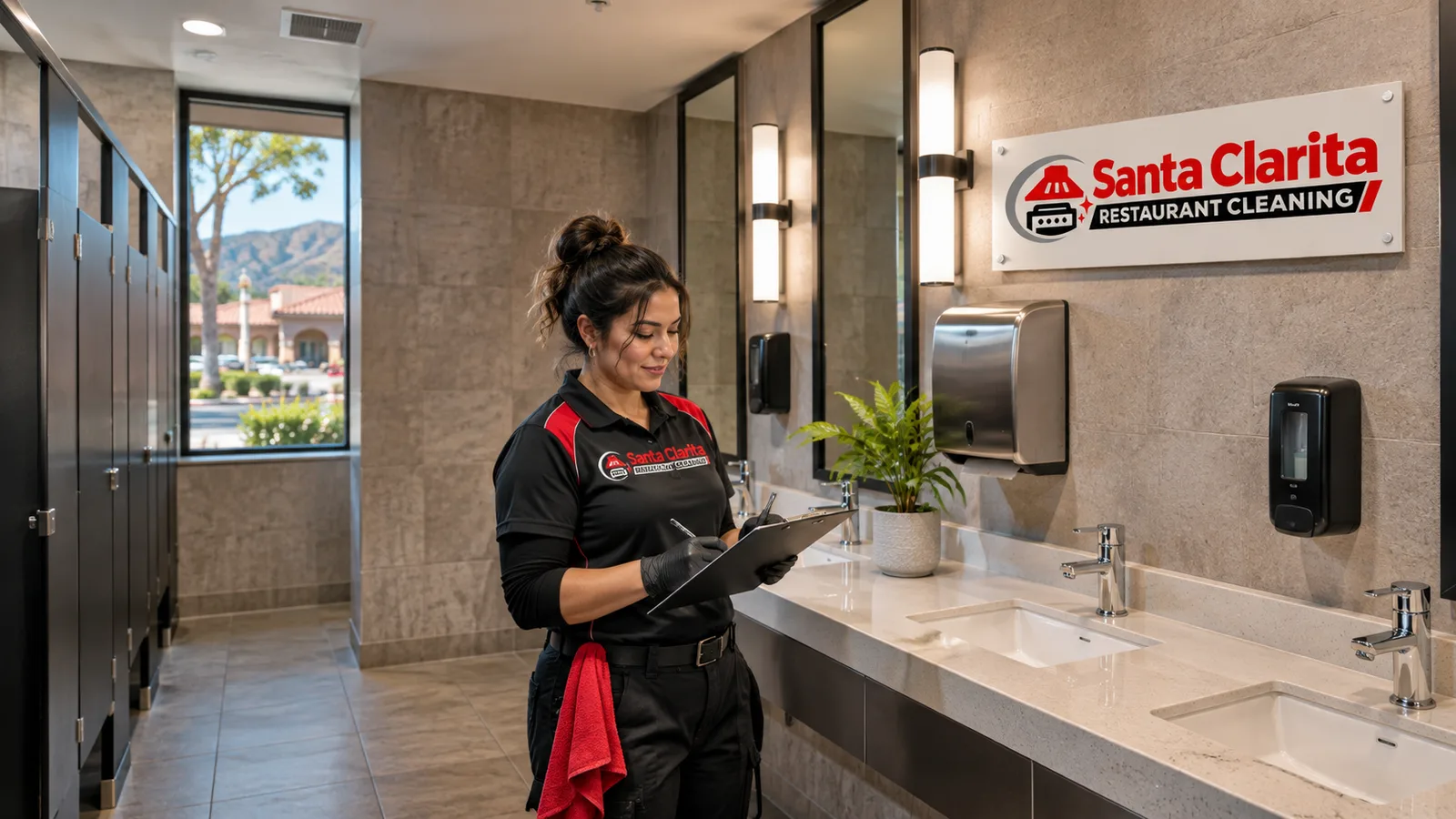
Restroom cleaning scope
Restaurant Bathroom Cleaning Simi Valley requires more than a quick wipe of the sink and a pass with a mop. Restrooms collect fingerprints, soap residue, tracked-in soil, paper waste, odors, and contamination on frequently touched surfaces. Our work addresses the entire room, including toilets, urinals, partitions, dispensers, counters, mirrors, floors, doors, and accessible fixtures.
Santa Clarita Restaurant Cleaning operates from Springbrook Avenue in Santa Clarita and provides commercial restroom care for restaurants in Simi Valley. We are Santa Clarita's restaurant specialists, and we build the work around each restaurant's hours, restroom layout, traffic level, surfaces, and supply procedures. Cleaning can be scheduled before opening, after closing, or during another approved low-traffic period so staff can concentrate on food preparation and guests.
The result is a restroom that looks attended to and is ready for inspection at the start of service. A written scope defines the fixtures, surfaces, recurring tasks, periodic detail work, supply responsibilities, access instructions, and preferred timing before service begins.
Detailed restroom care
A standard visit can include cleaning and disinfecting toilets and urinals, wiping partitions, removing splash marks, polishing mirrors, cleaning sinks and counters, emptying waste containers, and damp mopping floors. Door handles, faucet controls, flush levers, dispenser buttons, grab bars, and other high-touch points receive focused attention.
Products need the correct dwell time to work as directed. A disinfectant should remain visibly wet for the period stated on its label rather than being sprayed and immediately wiped away. The process also separates toilet-area tools from sink and counter tools to reduce cross-contamination. Color-coded cloths or clearly assigned equipment make that separation easier to maintain.
Detail work addresses buildup that routine cleaning may leave behind. Depending on the approved scope, this can include partition edges, grout lines, floor corners, wall splashes, baseboards, air-return covers, sanitary disposal units, and the areas around toilet bases. Restocking can cover toilet tissue, paper towels, hand soap, and liners when the restaurant supplies those consumables.
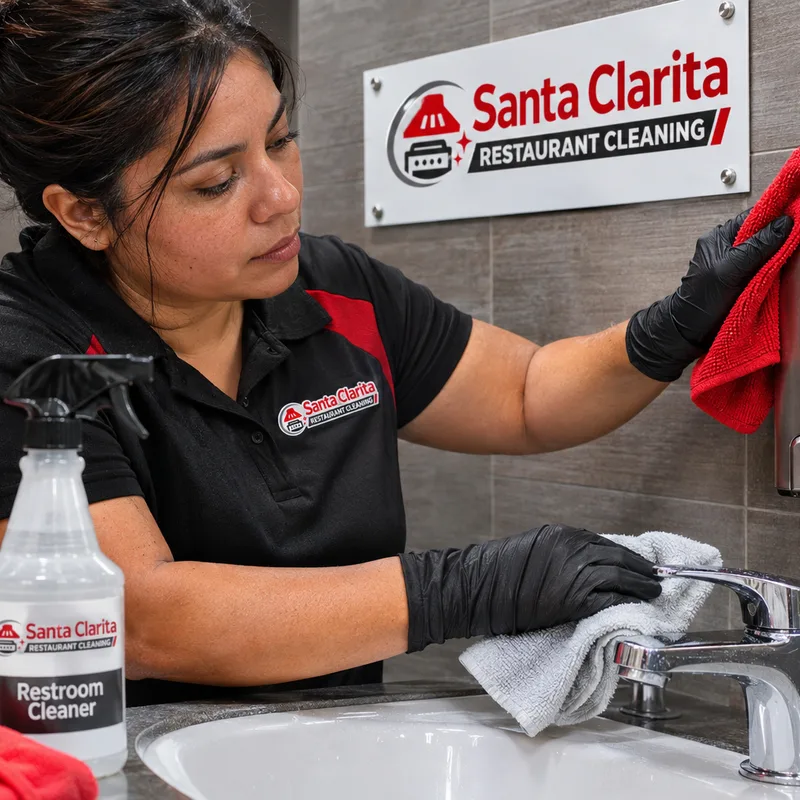
Restroom focus areas
Toilets, urinals, flush controls, faucets, grab bars, door hardware, and dispensers are cleaned with methods suited to their materials.
Loose debris is removed before damp mopping. Corners, thresholds, grout, wall edges, and areas around fixture bases can be added to periodic detail work.
Water spots, soap film, fingerprints, and splash marks are removed from mirrors, sinks, counters, backsplashes, and compatible metal surfaces.
Waste containers and sanitary disposal units are serviced as specified. Restaurant-provided tissue, soap, towels, and liners can be replenished during the visit.
Cleaning targets residue around fixtures, waste containers, grout, floor edges, and drains rather than relying on fragrance to cover an underlying source.
The cleaner checks fixtures, mirrors, floors, dispensers, waste containers, and touchpoints before the restroom is returned to use.
Local service planning
Restaurants near Simi Valley Town Center may have traffic that rises around shopping and dining periods, while locations along Los Angeles Avenue and Tapo Street often need work planned around customer flow and deliveries. Restaurants near the Ronald Reagan Presidential Library may also see demand change with events and visitor activity. Those operating patterns matter because restroom cleaning is safer and more thorough when the room can be closed temporarily and wet floors can remain undisturbed.
Simi Valley's dry, warm periods can increase the dust and fine grit carried inside on shoes. That soil collects near entrances, beneath partitions, and along floor edges. Removing dry debris before mopping helps prevent it from turning into muddy residue. During rainy weather, additional floor attention may be appropriate because wet footwear can leave tracks and increase slip concerns.
Frequency should follow actual restroom use. A small dining room with predictable hours may need a different plan than a high-volume restaurant with late service, multiple restroom stalls, or frequent turnover. We can separate recurring cleaning from periodic deep cleaning, which keeps the regular checklist clear while still addressing grout, corners, partitions, and other buildup-prone areas.
Cleaning workflow
We assess fixture counts, floor and wall materials, current condition, access, recurring problem areas, consumable responsibilities, and the restaurant's operating schedule.
The plan identifies tasks for every visit, periodic detail work, preferred service windows, approved products, supply arrangements, and any instructions for alarms, keys, or secured areas.
Waste and loose debris are removed, higher surfaces and touchpoints are addressed, fixtures are cleaned and disinfected, and floors are completed near the end of the visit.
A final review checks appearance, supplies, odors, floor condition, and missed residue. The scope or frequency can be revised when traffic, hours, or restroom use changes.
Surface-safe restroom care
Commercial restrooms combine several materials in a compact space. Vitreous china, stainless steel, chrome-plated fittings, mirrors, laminate partitions, tile, grout, and resilient flooring do not always tolerate the same chemistry. Acidic bowl cleaner, for example, should be controlled carefully and kept away from incompatible metals or stone. Abrasive tools can scratch polished fixtures and partition finishes.
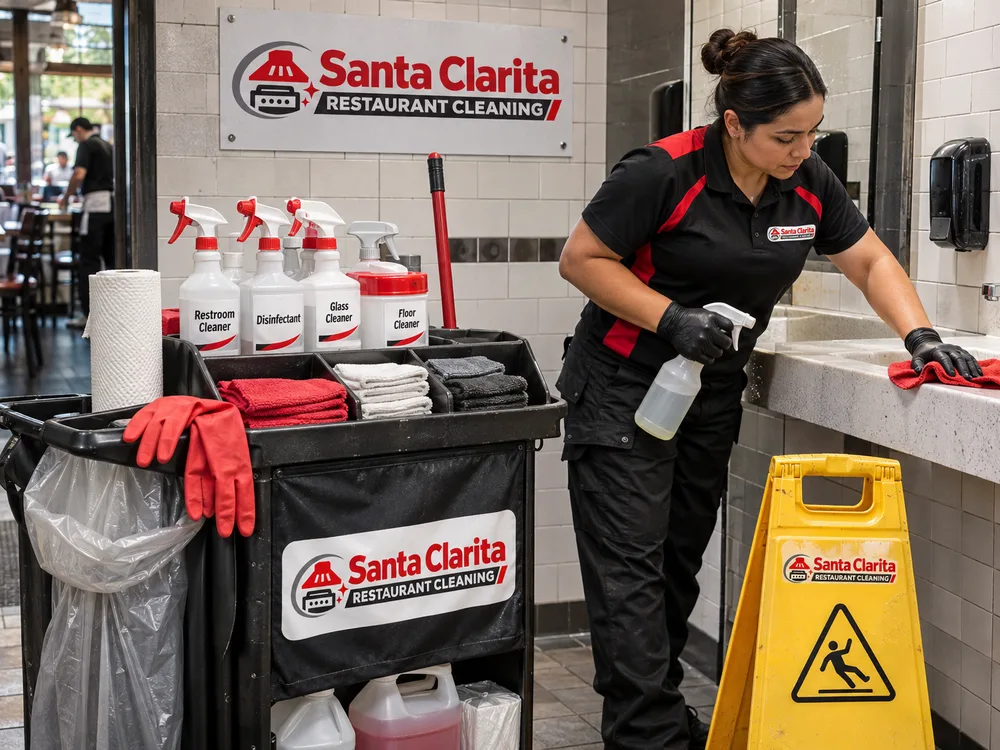
Cleaning and disinfecting are separate actions. Heavy soil and soap residue should be removed so the disinfectant can contact the surface properly. The product label determines dilution, compatible surfaces, required personal protective equipment, and contact time.
Mixing chemicals is unsafe, especially products containing bleach with acids or ammonia. Odors also require diagnosis. Residue around toilets, urinals, waste receptacles, grout, or floor edges may be the source. A persistent drain odor can indicate a dry trap or a plumbing issue, which cleaning alone may not correct. We report conditions that appear to need maintenance rather than masking them with excessive fragrance.
Get a written restroom-cleaning scope based on your hours, fixture count, traffic, current condition, and preferred service frequency.
Call for a Free QuoteCommon questions
Pricing depends on restroom size, fixture and stall count, cleaning frequency, current buildup, access, and the requested service window. Supply restocking, grout detailing, heavy scale removal, and unusually difficult conditions can change the scope. An on-site review allows Santa Clarita Restaurant Cleaning to provide a written price tied to the actual work.
The right frequency is based on guest volume, operating hours, fixture count, and how often employees perform checks during service. A restaurant near Simi Valley Town Center with strong lunch and dinner traffic may require a different schedule than a smaller dining room with limited hours. Recurring service and periodic deep cleaning can be scheduled separately.
Yes, restroom cleaning can be planned for an approved after-hours or pre-opening window when access and staffing arrangements permit. This provides time for product dwell time, detail work, and floor drying without directing guests around equipment or wet surfaces. Access instructions and alarm procedures should be documented before the first visit.
Consumable handling is defined in the service agreement. The restaurant may provide its preferred soap, tissue, towels, liners, and sanitary products for the cleaner to restock, or another arrangement may be discussed during the assessment. Par levels and storage locations should be recorded so low supplies can be identified before service.
Many forms of scale, soap film, grout soil, and fixture buildup can be improved through periodic detail cleaning, but the method depends on the affected material and severity. Chrome, stainless steel, stone, tile, and partition finishes require different product choices. Permanent etching, corrosion, failed grout, or damaged coatings may need repair rather than additional cleaning.
Visit length depends on the number of restrooms, stalls, urinals, sinks, floor area, soil level, and whether detail work or restocking is included. Product contact time and safe floor drying also affect the schedule. The service window is established after reviewing the Simi Valley restaurant and its operating requirements.
A recurring odor should be traced to its likely source rather than covered with fragrance. Common areas to inspect include toilet bases, urinals, grout, waste containers, sanitary units, floor edges, and drains. If the cause appears to be a dry trap, leak, damaged seal, or ventilation problem, restaurant management may need a plumber or maintenance technician.
Tell us about your Simi Valley restaurant, restroom layout, operating hours, and recurring concerns. We will help define the tasks, timing, and frequency needed to keep the space ready for guests.