
Fixtures and Partitions
Toilets, urinals, flush handles, seats, bowls, partitions, doors, and latches are cleaned and disinfected with attention to splash zones and buildup around fixture bases.
Serving Santa Clarita, California & surrounding areas
Open 24/7
Restroom cleaning • Santa Clarita
Keep guest facilities clean, stocked, and ready for every shift with a recurring schedule built around your operating hours.
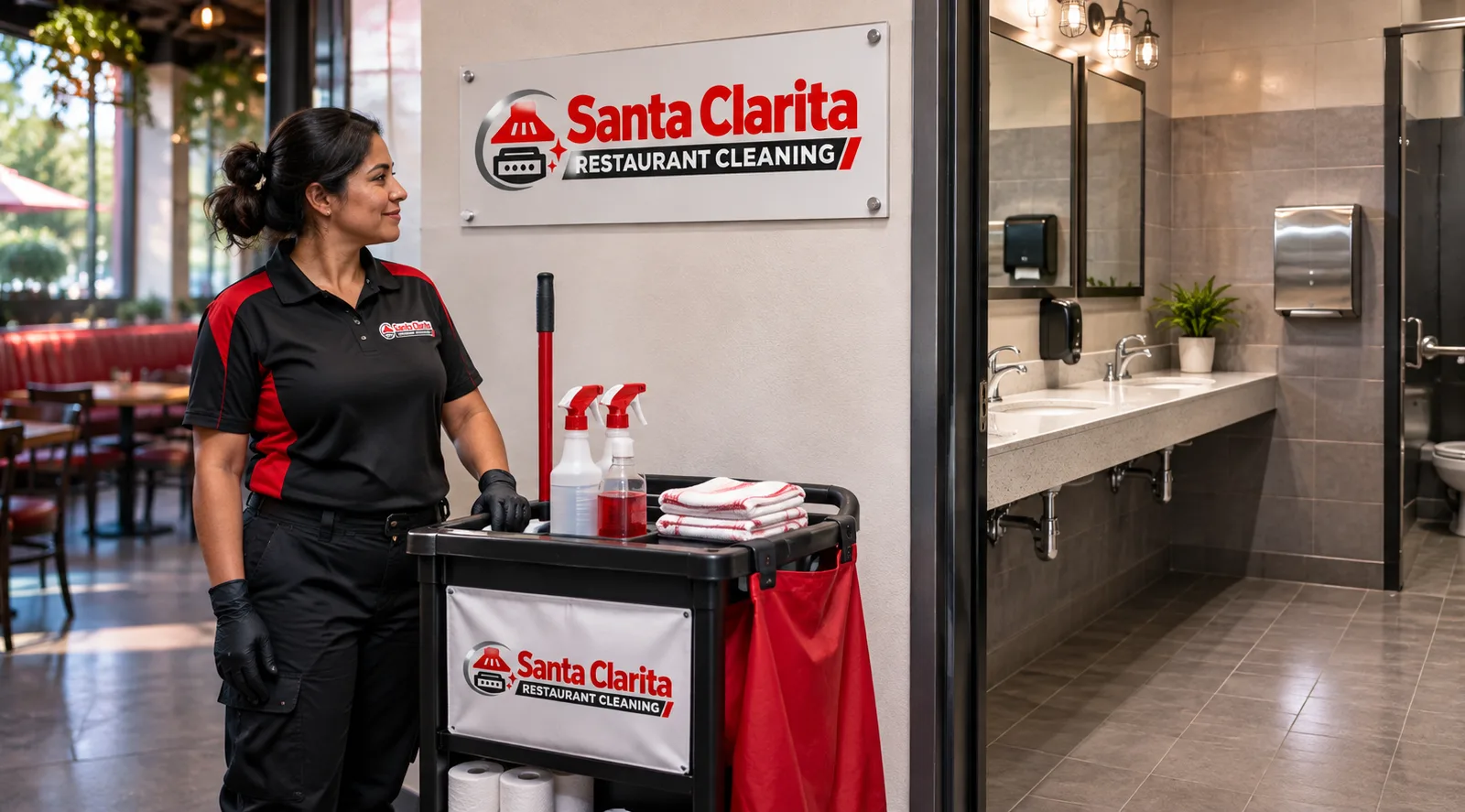
Guest-ready facilities
Restaurant Restroom Cleaning requires more than a quick wipe between rushes. Guests notice odors, empty dispensers, marked mirrors, wet floors, and overflowing waste bins immediately. Our work addresses the full room, including toilets, urinals, sinks, counters, partitions, touchpoints, floors, dispensers, and waste containers.
Santa Clarita Restaurant Cleaning provides scheduled work after closing, overnight, or during another agreed service window. Our work as an experienced restaurant team in Santa Clarita includes coordinating entry, alarm instructions, priority areas, and completion expectations before recurring service begins. The goal is a restroom that is ready when employees arrive and remains easier for them to maintain during service.
Restaurants near Westfield Valencia Town Center may need cleaning timed around late dining and retail traffic. Old Town Newhall businesses often operate in compact commercial spaces where supply placement and access require planning. In Canyon Country and Saugus, dispersed shopping centers can make consistent arrival windows especially useful for managers overseeing more than one location. Each scope should reflect the restaurant's hours, restroom layout, fixture count, and level of guest traffic.
Cleaning scope
Toilets, urinals, flush handles, seats, bowls, partitions, doors, and latches are cleaned and disinfected with attention to splash zones and buildup around fixture bases.
Faucets, counters, basins, soap dispensers, door handles, push plates, and other high-touch surfaces receive focused cleaning with appropriate dwell time for the disinfectant used.
Mirrors are cleaned without streaks, and agreed consumables such as toilet tissue, paper towels, and hand soap are checked and restocked from the restaurant's supplies.
Loose debris is removed before the floor is wet cleaned. Corners, edges, grout lines, and the areas behind doors receive attention rather than being skipped during a fast mop.
Liners are replaced, receptacles are wiped as needed, and common odor sources around drains, grout, fixture bases, and waste containers are addressed within the agreed scope.
The cleaner checks for missed soil, wet areas, low supplies, visible damage, leaks, or other conditions that should be reported to restaurant management.
After-hours scheduling
Restaurant night cleaning is often the best choice when guest access, employee movement, and wet-floor risk make daytime work impractical. Cleaning after the final guests leave gives the crew access to stalls, floors, and touchpoints without repeatedly stopping for restroom traffic. Overnight restaurant cleaning can also coordinate restroom work with dining-area cleaning while keeping restroom tools and chemicals separate.
A nightly restaurant cleaning schedule suits facilities with steady traffic, late operating hours, or restrooms that need a complete reset before every opening. Daily restaurant cleaning can be scheduled for selected days or every operating day. A lower-frequency recurring restaurant cleaning plan may fit smaller establishments when employees handle documented checks during service and the janitorial crew performs the deeper scheduled work.
The schedule should state the service days, access window, expected completion time, consumables responsibility, and procedure for reporting maintenance concerns. It should also account for holidays, special events, and unusually late closings so cleaners do not arrive while guests are still using the facility.
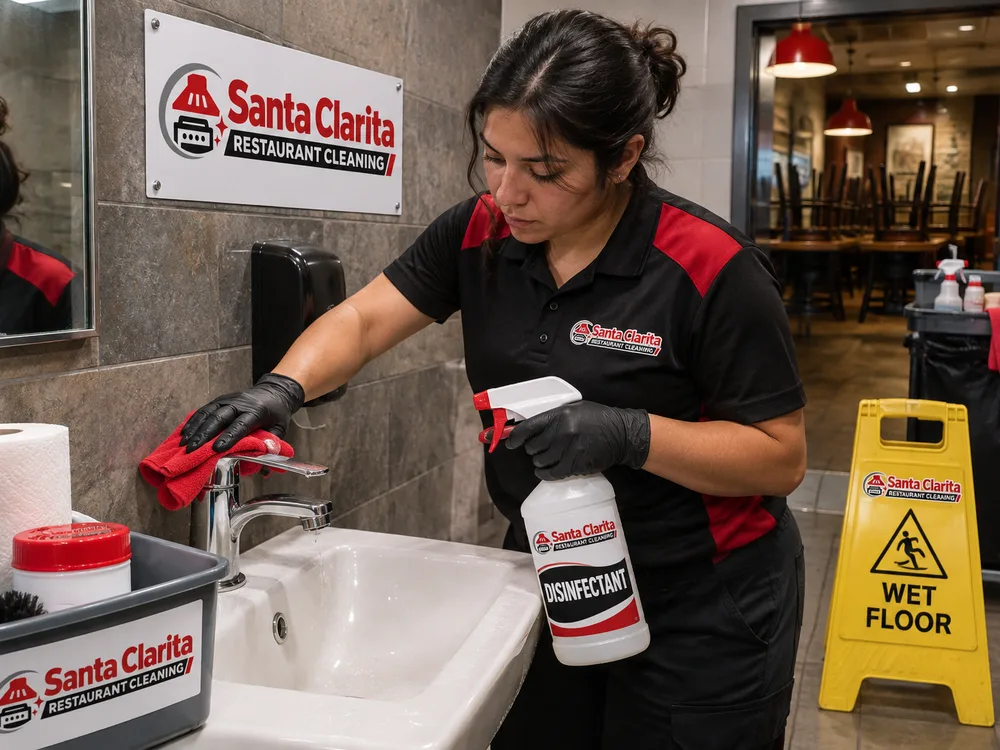
Recurring workflow
The first review records fixture counts, flooring, partitions, dispensers, current soil conditions, access needs, and known trouble spots. Management can identify guest complaints or areas that need special attention.
The written plan defines nightly, daily, or selected-day service. It also distinguishes routine tasks from periodic work such as detailed grout cleaning, floor-edge scrubbing, or additional buildup removal.
Managers provide the approved entry method, alarm instructions, restricted areas, and closing schedule. Cleaning products are used according to their labels, including required dilution and contact time.
The crew posts wet-floor signs, removes waste, cleans higher surfaces before lower ones, disinfects touchpoints and fixtures, and finishes the floor last. Restroom equipment remains separate from tools used in food-preparation areas.
A final check covers appearance, odor sources, dry and usable access, stocked dispensers, and any visible leak or damage. Reported issues help the restaurant separate cleaning needs from plumbing or repair work.
Process and precautions
A dependable restaurant janitorial company should be able to explain its restroom sequence, chemical controls, and cross-contamination precautions. Cleaning and disinfecting are different steps: cleaning removes visible soil, while disinfecting uses a registered product on an already cleanable surface for the label's stated contact time. Spraying and immediately wiping may not provide the specified dwell time.
Color-coded microfiber cloths and restroom-only mop equipment help prevent tools from moving between restroom surfaces and dining or food-handling areas. Safety Data Sheets should be available for workplace chemicals, and products should never be mixed. Acidic bowl cleaners, chlorine products, and ammonia-containing cleaners require particular care because unsafe combinations can release hazardous gases.
Good restaurant janitorial cleaning also protects surfaces. Abrasive pads can scratch polished fixtures, and the wrong chemical can damage natural stone, metal finishes, grout, or resilient flooring. The scope should identify unusual materials before work begins. A stable plan is more useful than a vague promise because managers can verify which tasks occur every visit and which tasks follow a periodic rotation.
Local operating conditions
Santa Clarita's generally dry Southern California conditions can increase tracked dust near entrances and on hard floors. Restroom floor care should remove loose grit before damp mopping so soil is lifted rather than spread.
A restroom used heavily during a dinner rush needs a different reset than one with limited traffic. Fixture count, guest volume, operating hours, and employee checks all affect the appropriate frequency.
A consistent crew becomes familiar with access routines, supply locations, fixture quirks, and areas where buildup returns first. That familiarity supports more predictable completion and clearer reporting.
Cleaning will not repair a leaking supply line, failed flush valve, loose seat, damaged dispenser, or persistent sewer odor. Prompt reporting lets management assign the right repair before the condition worsens.
Pricing factors
Restaurant restroom cleaning in Santa Clarita typically costs about $75 to $200 per visit for a small restaurant when purchased as recurring service; larger facilities, multiple restrooms, heavy buildup, or overnight access can raise the price to $200 to $400 or more. Nightly contracts are usually priced after reviewing the full recurring scope.
Final cost depends on fixture count, restroom size, service frequency, current condition, floor material, supply restocking, access requirements, and whether periodic detail work is included. The exact price is confirmed after a walkthrough or consultation.
A written restroom scope gives managers clear service days, task frequencies, access instructions, and reporting expectations before recurring work starts.
Call for a Free QuoteCommon questions
Yes, restaurant night cleaning can be scheduled after closing or during an approved overnight access window. The plan should account for final guest departure, employee closing duties, alarms, and the time needed for floors to be left safe for the opening crew.
No, the right frequency depends on guest traffic, operating days, fixture count, employee cleaning routines, and the condition expected at opening. Busy restaurants near Valencia's major retail and dining areas may benefit from nightly service, while a smaller operation may use selected-day service with documented staff checks between visits.
Supply handling depends on the agreement. A crew can check and restock toilet tissue, paper towels, and soap from restaurant-provided inventory, or the parties can define another arrangement during the walkthrough. The written scope should identify who purchases supplies and where backup stock is stored.
A routine visit may take about 20 to 45 minutes per small restroom, but fixture count, soil level, floor condition, restocking, and required detail work change the duration. The initial condition may require more time than later recurring visits once buildup has been brought under control.
Yes, but open-hours work requires coordination because the restroom may need to be closed temporarily and wet-floor controls must remain in place. After-hours service is often more practical when cleaners need uninterrupted access to every stall, fixture, partition, and floor area.
Recurring cleaning can control odors caused by waste, surface soil, dirty grout, fixture splash, and some drain buildup. Odors caused by a dry trap, plumbing leak, failed seal, or sewer-line problem require maintenance or a licensed plumbing professional; the cleaning crew should report those warning signs.
A useful proposal should identify service frequency, restroom counts, recurring tasks, periodic tasks, access windows, consumables responsibility, exclusions, and the method for reporting damage or low stock. Santa Clarita restaurants with seasonal hours or special-event closings should also document how schedule changes are communicated.
Tell Santa Clarita Restaurant Cleaning about your operating hours, restroom layout, current concerns, and preferred service frequency. We will help define a practical scope for nightly, daily, overnight, or recurring cleaning.